Baronnies Provençales & Ventoux
The Comtat Venaissin is a historic region in southeastern France, corresponding roughly to today’s Vaucluse department. Its history is closely linked to Roman Gaul and the papacy of Avignon.
Roman Empire and Middle Ages
The name Comtat Venaissin comes from Venasque, which was its first administrative center. In Roman times, the region was part of the province of Gallia Narbonensis. After the barbarian invasions, it came under the control of the Visigoths, and later the Franks.
In the Middle Ages, the territory belonged to the Counts of Toulouse. In 1229, following the Albigensian Crusade, Count Raymond VII ceded the region to the French crown under the Treaty of Paris (1229).
The Papal Era (1274–1791)
In 1274, King Philip III of France officially transferred the Comtat to Pope Gregory X. From then on, the territory became a papal possession, administered from Rome. The purchase of Avignon in 1348 by Pope Clement VI strengthened papal control over the region. The Comtat became a refuge for various minorities, especially Jews, who found relative protection there.
Revolution and Annexation to France (1791)
During the French Revolution, the Comtat Venaissin was stirred by movements favoring annexation to France. In 1791, an assembly voted in favor of union with the French Republic, which was officially recognized in 1793. The territory was incorporated into the newly created department of Vaucluse.
Heritage
Today, the Comtat Venaissin retains many traces of its past, including ramparts, palaces, Roman ruins, and a strong cultural influence. Its unique history makes it a region rich in heritage, blending both French and papal influences.

-->

The Comtat Venaissin
Roman, feudal, papal, then French

The Roman heritage of Vaison-la-Romaine
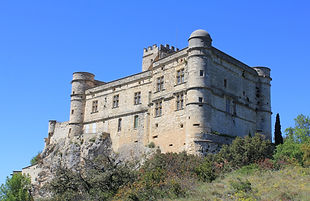
The Barroux Castle

Châteauneuf du Pape

Avignon
Saint Benezet Bridge